Solar Technology: Harnessing the power of the sun for a sustainable future
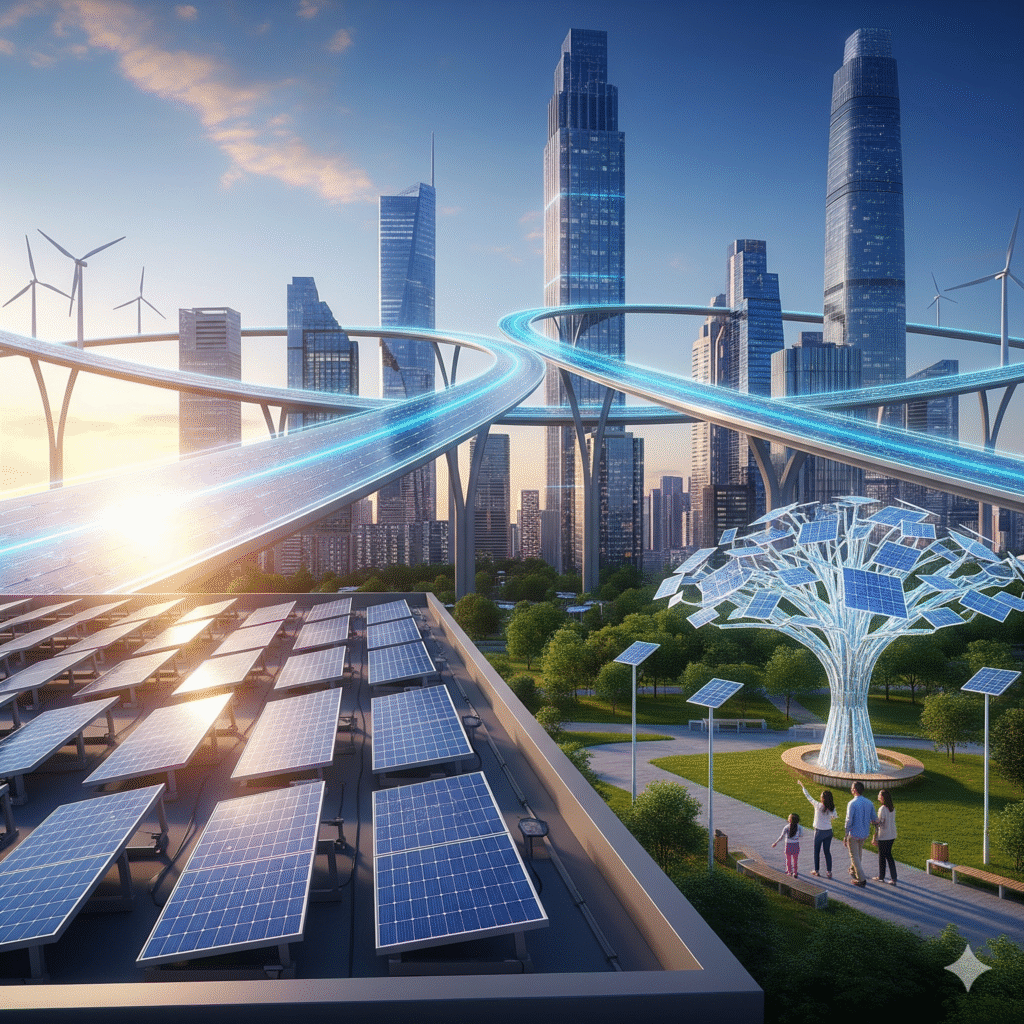
Solar Technology: Harnessing the power of the sun for a sustainable future
In today’s world, where climate change and energy crisis are a major challenge, solar technology has emerged as a ray of hope. It is not just a technology but a powerful means to save our planet and move towards a sustainable future. Generating electricity using sunlight, which is available in abundance on earth, is a revolutionary step that can free us from our dependence on fossil fuels.
How does solar technology work?
The basic principle of solar energy is based on the “photovoltaic effect”. Solar panels, commonly called solar modules, are made of semiconductor materials such as silicon. When sunlight (photons) falls on these panels, they excite electrons, causing the flow of electricity. This direct current (DC) electricity passes through an inverter, which converts it into alternating current (AC) used in homes and industries. Types of Solar Technology and Latest Innovations
Solar energy is not limited to just generating electricity. It has many forms, the main ones of which are:
1.Photovoltaic (PV) system: This is the most common type, in which solar panels generate electricity. Nowadays, monocrystalline and polycrystalline solar panels are most commonly used, with an average efficiency of 15% to 22%.
2.Solar Thermal System: This system heats water or other liquids using the heat of the sun. It is used to heat water in homes (Solar Water Heaters) and to generate steam in industries.
Latest Innovations:
Solar energy is becoming even more efficient due to advances in science and technology. Perovskite Solar Cells are a major discovery in this field. These cells are lighter, cheaper and more efficient than conventional silicon panels. Research has also shown that anti-solar panels are being developed that can generate electricity even at night, although it is less than during the day.
Key Benefits of Solar Energy
There are several significant advantages of adopting solar energy:
- Environmental Benefits: It is a clean energy source. Its use reduces carbon emissions, which helps prevent air pollution and climate change.
- Economic Benefits: Once installed, solar power reduces electricity bills significantly. Initiatives like the Government of India’s ‘PM Surya Ghar Free Electricity Scheme’ provide subsidies on installing rooftop solar, making it even more affordable.
- Energy Independence: Solar energy helps us reduce our dependence on the grid for electricity, especially in rural and remote areas.
- Low Maintenance: Solar panels require very little maintenance and can last for more than 25 years.
Challenges and Future
Despite the many advantages of solar energy, there are some challenges too, such as high initial cost and low power generation at night or cloudy days. However, energy storage (battery) technology is also progressing rapidly to address these challenges.
In a country like India, which gets abundant sunlight throughout the year, the future of solar energy is very bright. India has set a target of achieving 500 GW of renewable energy capacity by 2030, a large part of which will come from solar energy. Government initiatives like PM-KUSUM Yojana are helping farmers install solar power pumps, thereby improving irrigation.
Conclusion
Solar technology is not just an alternative energy source, but the basis of a sustainable and self-reliant future. As technology is becoming more efficient and affordable, it is becoming the most preferred way to light our homes, industries and cities. It is an important step towards making our planet clean and green by harnessing the unlimited power of the sun.