Performance vs. Portability of Unibody Laptops vs. PC
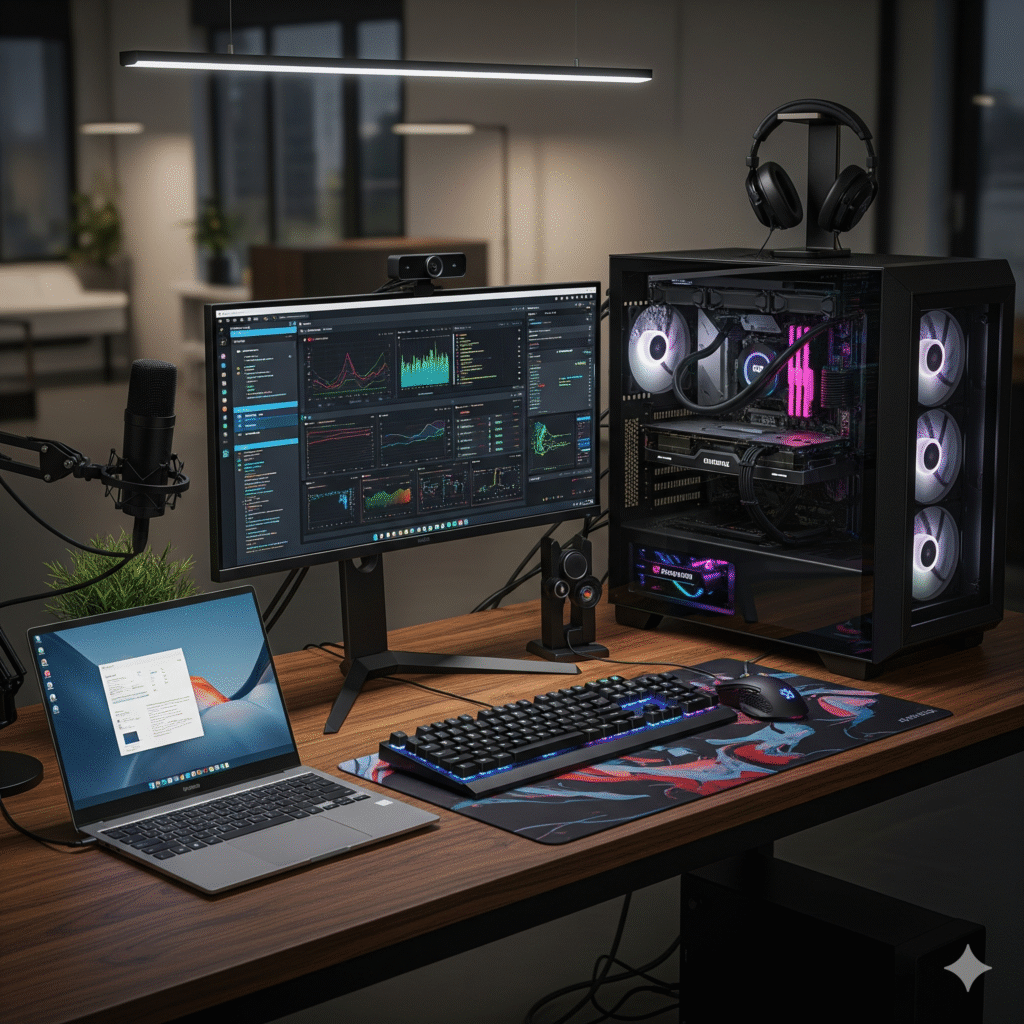
Unibody Laptops vs PCs: Performance vs Portability – What’s Best for You?
In today’s age when everyone relies on technology for everything from work to entertainment, choosing the right device becomes a crucial decision. Especially when it comes to Unibody Laptops and Desktop PCs, the question often arises: will you compromise performance for portability, or give up portability for power? This article will explain the differences between the two, their advantages and disadvantages in detail, so that you can make the best choice for your needs.
- Unibody Laptops: The epitome of portability
Unibody laptops are made from a single piece of aluminum or magnesium. Their design is thin, light and sturdy, making them very easy to carry anywhere.
- Portability: This is the biggest advantage of laptops. You can easily carry them with you to meetings, colleges, cafes or while traveling.
- Battery Life: They have a built-in battery, so you can work for hours even without a power outlet.
- Integrated design: It has the screen, keyboard, trackpad and all components in a single unit, making it extremely simple to use.
Disadvantages:
Compromise on performance: Their compact design does not allow for better cooling, which limits the use of high-end components. This means that their performance is often lower than a PC at the same price.
- Difficult to upgrade: It is almost impossible to upgrade components like RAM, storage or processor in unibody laptops.
- Expensive: Due to the manufacturing process and compact design, they are often more expensive than desktop PCs with similar specifications.
- Desktop PC: Powerhouse of performance
Desktop PCs have separate components like monitor, keyboard, mouse, and tower (CPU). They are known for their unmatched performance and upgradability.
- Better performance: Desktop PCs have a larger chassis that provides better airflow and cooling. This allows you to use high-end processors, graphics cards, and more RAM, which is essential for tasks like gaming, video editing, and 3D rendering.
- Upgradability: You can easily upgrade any component according to your needs. Over time, you can add graphics cards, RAM, or storage, increasing the life of your device.
- Affordability: Desktop PCs are often much cheaper than laptops for the same performance.
Cons:
- No portability: As the name suggests, desktop PCs are difficult to move from one place to another.
- Space-taking: A PC with a monitor, keyboard, and mouse requires a lot of space.
- Power consumption: Desktop PCs consume more power than laptops.
Final verdict: Which is right for you?
Choosing what’s best for you depends on your individual needs:
Unibody Laptops are for you if:
- You travel frequently.
- Your work is limited to web browsing, documentation, and light entertainment.
- You want a simple, all-in-one device.
Desktop PCs are for you if:
- You work from one place (such as home or office).
- Your work involves high-performance applications such as gaming, video editing, or graphic design.
- You want the ability to upgrade your device in the future.
In short, Unibody Laptops offer portability and convenience, while Desktop PCs offer unmatched performance and value. Keeping your usage patterns and budget in mind can help you make an informed decision.